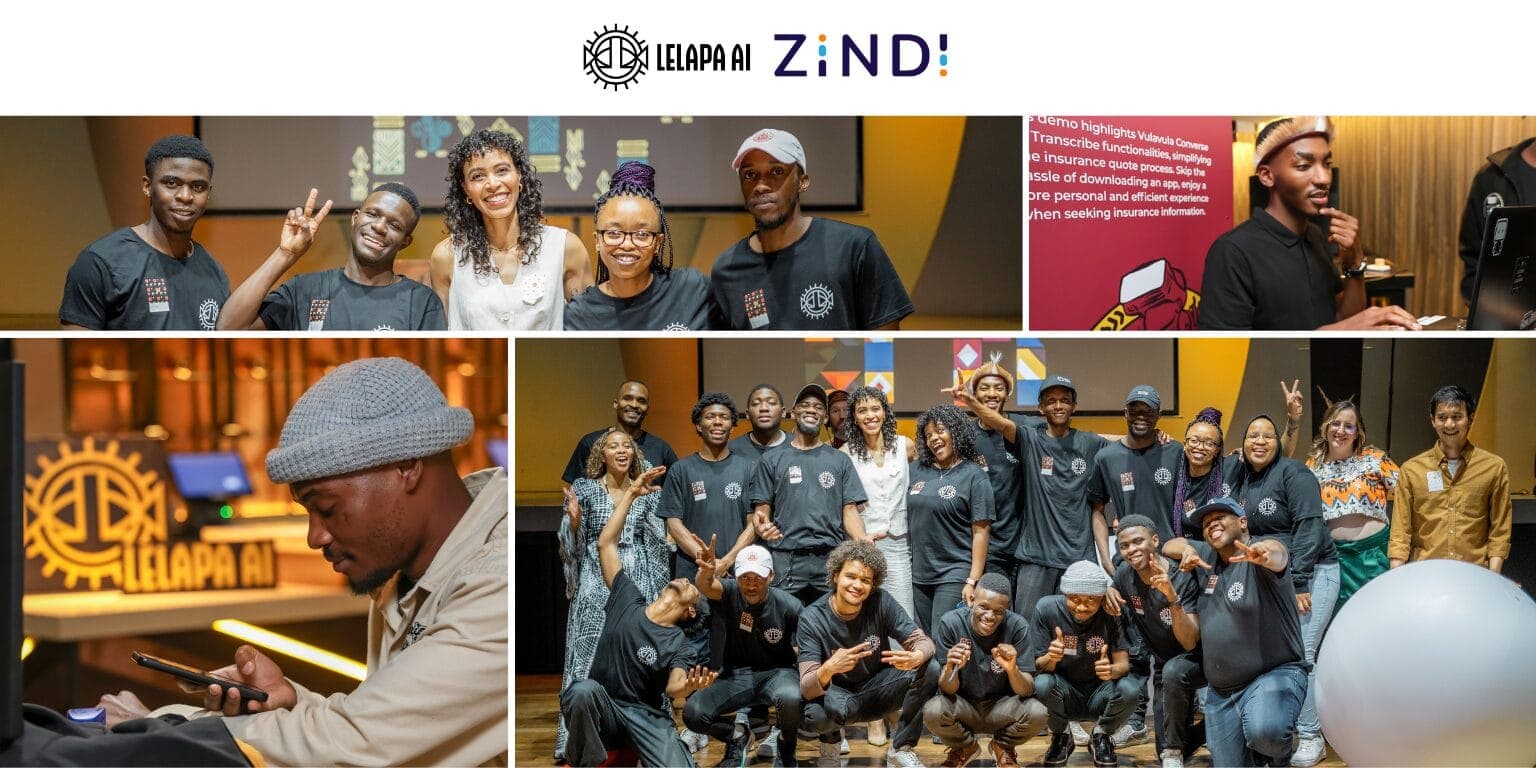
InkubaLM, Africa's inaugural multilingual Small Language Model, has achieved a remarkable 75% size reduction while preserving performance. This breakthrough emerged from the Buzuzu-Mavi Challenge, a collaboration between Lelapa AI and Zindi that engaged over 490 data scientists, researchers, and machine learning engineers from 61 countries. The challenge aimed to compress InkubaLM's computational requirements without sacrificing translation and language comprehension capabilities.
Why Size Matters
In regions across Africa and the Global South where infrastructure varies significantly, efficient models prove more practical than larger alternatives. Constrained device capabilities, inconsistent connectivity, and limited cloud access necessitate resource-conscious design. Streamlined models like InkubaLM enable deployment across diverse sectors:
- Farmers accessing climate information in native languages
- Students utilizing AI educational tools on budget smartphones
- Call centers and medical facilities delivering multilingual support independently
Originally designed for isiXhosa, Swahili, and Hausa, InkubaLM became substantially more compact through optimization techniques implemented during the challenge, demonstrating how architectural efficiency drives scalable multilingual language AI.
The Winners
1st Place: Yvan Carré (Cameroon) employed adapter heads, quantization, and knowledge distillation to develop a compressed, adaptive, efficient InkubaLM variant performing well across multilingual tasks.
2nd Place: Stefan Strydom (South Africa) aggressively reduced the model to 40M parameters by trimming vocabulary size, decreasing layer depth, and implementing shared embeddings.
3rd Place: Team AI_Buzz — Abdourahamane Idé Salifou, Mubarak Muhammad, and Victor Olufemi (Nigeria and Niger) blended multiple datasets and distilled a performant student model with 177M parameters.
All five finalists were African innovators, demonstrating the continent's substantial machine learning and data science expertise.
In Their Words
Yvan Carré stated that "Language is more than just communication, it's a carrier of culture, identity, and knowledge. By supporting low-resource languages, we empower communities to participate fully in the digital world."
Stefan Strydom emphasized that "Building tools for people in their own languages is critical to making the technology accessible to more people."
Winners consistently stressed reliability in real-world deployment contexts, prioritizing efficiency, adaptability, and practical implementation across varied linguistic and technical environments.
A Step Forward for African AI
Pelonomi Moiloa, Lelapa AI's CEO and co-founder, noted that "Optimizing language models under real-world constraints is a technical challenge with global relevance. By focusing on efficiency, adaptability, and deployment realities, we are building language systems that can scale beyond research environments and into everyday use."
Celina Lee, Zindi's CEO and co-founder, stated: "It is a joy and a privilege for us at Zindi to partner with Lelapa AI on the Buzuzu-Mavi Challenge. Seeing the impact that our incredible community of AI builders can have on a truly African problem is inspiring and rewarding."
What's Next?
Several top submissions will be integrated into future InkubaLM iterations. While remaining a foundational model rather than production-ready software, InkubaLM serves as a building block for efficient multilingual applications. Its open-source availability enables continued experimentation, optimization, and fine-tuning for real-world deployment throughout Africa and the Global South.
InkubaLM's original development received computational support from Microsoft's AI for Good initiative.