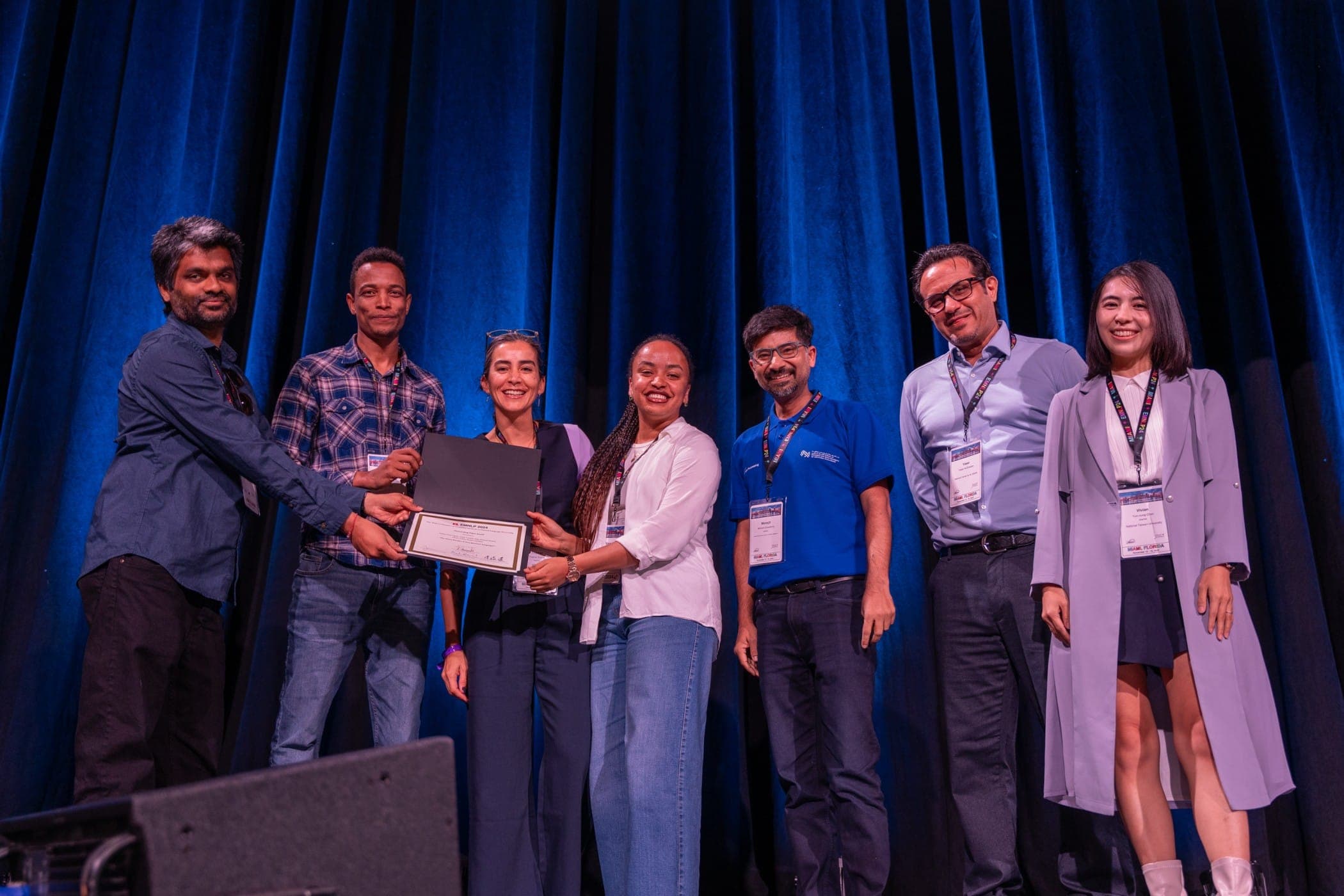
We are proud to announce that two of our exceptional team members, Atnafu Tonja and Benjamin Rosman, have received the Outstanding Paper Award at the prestigious 2024 Conference on Empirical Methods in Natural Language Processing (EMNLP) in Miami. Their groundbreaking paper, The Zeno's Paradox of 'Low-Resource' Languages, highlights our commitment to revolutionising natural language processing (NLP) for African languages. This accolade also honours their co-authors Hellina Hailu Nigatu, Thamar Solorio, and Monojit Choudhury, reflecting a collective effort to push the boundaries of NLP research.
The Zeno's Paradox of 'Low-Resource' Languages — A New Perspective
The paper explores the complexities of the term "low-resource languages," a label frequently applied to African and other underrepresented languages. Through an in-depth analysis of 150 academic papers, the authors challenge the simplistic, data-centric definition of "low-resource" and reveal four dimensions of "resourcedness": socio-political factors, human and digital resources, artefacts like linguistic data, and community agency. They argue that ignoring these aspects risks perpetuating structural inequalities and producing technologies that fail to meet the needs of the communities they are meant to serve.
This research offers actionable recommendations for developers, researchers, and policymakers to create more impactful and ethical language technologies. It underscores the importance of holistic approaches that honour the sociocultural and linguistic uniqueness of underrepresented languages.
What Winning Means to Our Team
Reflecting on this recognition, Atnafu shared, "Winning the Outstanding Paper award at EMNLP 2024 is such an incredible honour." The researcher expressed pride in having the collaborative effort acknowledged at this prestigious level.
Aligning with Lelapa AI's Mission
At Lelapa AI, we believe in creating AI solutions that empower African communities by addressing the unique linguistic and cultural contexts of the continent. This paper aligns seamlessly with our mission, highlighting critical issues in NLP research and advocating for approaches that genuinely serve African languages.
Technologies like InkubaLM and Vulavula are at the forefront of tackling these challenges. For instance, Vulavula's capabilities in translation, speech-to-text, and sentiment analysis bridge gaps in communication and representation for underrepresented languages. Similarly, InkubaLM models embody the nuanced understanding advocated in the paper, capturing African linguistic diversity and enabling equitable access to AI-driven solutions.
Why This Research Matters
As Atnafu eloquently puts it, "Advancing NLP for underrepresented languages isn't just about creating more data." Instead, the focus should rest on comprehending and tackling the distinctive sociocultural and community-specific requirements that guarantee technology provides genuine benefit to those it serves.
This perspective resonates deeply with Lelapa AI's values. By rethinking what it means for a language to be "low-resourced," the paper calls for a shift from data-centric metrics to community-focused, context-aware solutions — an approach that forms the backbone of our work.
Looking Ahead
The recognition of The Zeno's Paradox of 'Low-Resource' Languages reinforces our commitment to creating inclusive, ethical, and impactful AI solutions. It's a proud moment for Lelapa AI, and we are excited to see how this research will inspire further advancements in the field.
This award underscores the importance of research that puts communities first. Explore how Lelapa AI is driving inclusive innovation with InkubaLM and Vulavula.